
Leeham News and Analysis
There's more to real news than a news release.



Boeing says 1Q deliveries will be lower than forecast, but will catch up later
By Scott Hamilton

Jay Malave, EVP and CFO of The Boeing Co. Credit: Boeing.
March 17, 2026, © Leeham News: Boeing’s deliveries in the first quarter may be lower than originally forecast, but will catch up throughout the remainder of this year, the company’s chief financial officer said today.
Jay Malave said that a quality defect on the 737 line affected about 25 airplanes. The defect was spotted by Boeing and involves scratched wiring traced to a miscalibrated machine at a Boeing facility.
“We’ve got about a population of about 25 aircraft that are impacted by that, so they’ll have to undergo some level of rework,” Malave said. “You’re talking around three days of rework, so not a significant amount. We have resumed deliveries as of last week. The impact here is really one of timing.
“We’ll see about 10 aircraft we were expecting to deliver around 120 737s in the first quarter, so we’ll slip about 10 of those deliveries into the second quarter. [The impact is] fairly limited in the grand scheme of things.”
Deliveries of the 787 will be slower and lower than hoped due to the timing of certification for premium-class interiors.
Iran war threatens Boeing in more ways than just airliner orders
Subscription Required
Editor’s note: When LNA is asked about the progress of Boeing’s recovery, we always express a caveat before answering: It depends on events outside Boeing’s control. The Iran war is just such an event.
By the Leeham News Team
March 17, 2026, © Leeham News: The paradox at the heart of modern commercial aviation is that the materials engineered to insulate airlines from oil price volatility are themselves creatures of the petrochemical complex.
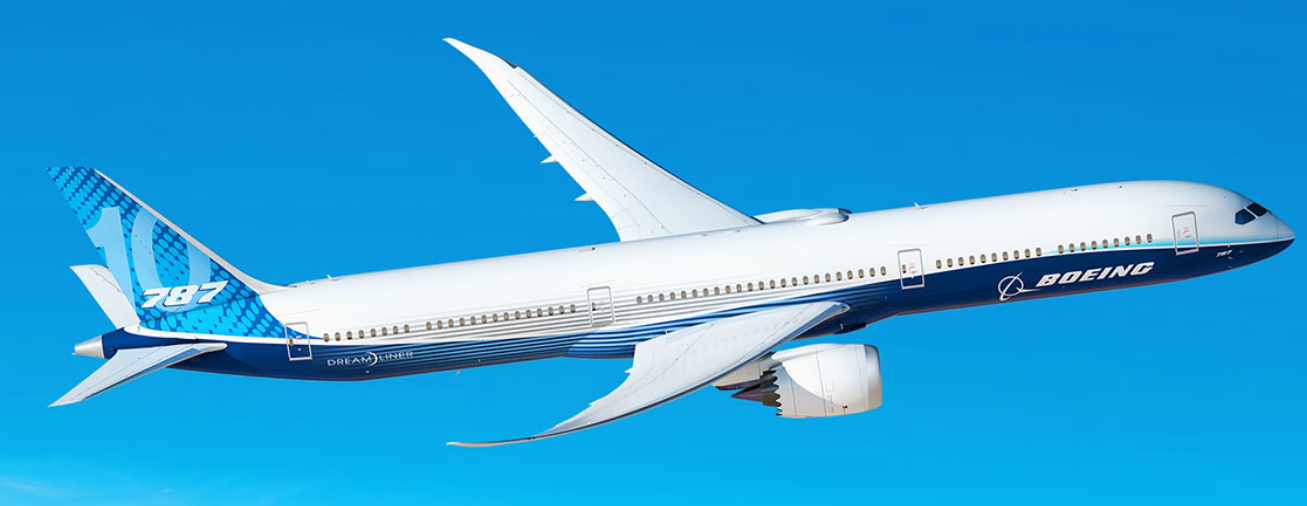
Boeing’s 777X and 787 programs, with their heavy use of composites, face high risks of disruptions and costs due to the Iran War. Source: Boeing.
Carbon fiber composites reduce fuel burn by 20% over legacy aluminum airframes. Yet the polyacrylonitrile precursor fiber, the epoxy matrix resins, the autoclave energy—the entire manufacturing stack—runs on oil. When the Strait of Hormuz effectively closed on Feb. 28, it did not merely threaten jet fuel supply chains. It aimed directly at the raw material foundation of Boeing’s two most consequential programs: the 787 Dreamliner and the 777X.
Airbus faces similar challenges for the A350. A major Boeing composites supplier, Toray Industries, is used in secondary structures, and the impact is far smaller. US-based Hexcel is a major composites supplier to Airbus through its European operations.
Related Stories
- Boeing asks suppliers for Middle East impact
- Middle East impact on Airbus, Boeing
- War will grind on until September
Air Lease merger this year creates new lessor powerhouse
Subscription Required
By Karl Sinclair
 March 16, 2026, © Leeham News: Aircraft lessor giant Air Lease Corporation (ALC) of Los Angeles (CA) closed the books on 2025 and reported record figures.
In early 2026, the company will cease to exist. The Sumitomo Corporation, SMBC Aviation Capital, Apollo, and Brookfield funds are expected to acquire Air Lease Corporation for $7.4bn in the early part of this year and rebrand it the Sumisho Air Lease Corporation (SALC). SALC will be a new powerhouse lessor that Airbus, Boeing, and the engine makers will be dealing with.
According to ALC, Air Lease Class A common stockholders will receive $65 in cash for each share of Class A common stock of Air Lease held immediately prior to the effective time of the merger.
SMBC will then service most of Sumisho Air Lease Corp.’s fleet, significantly expanding its service portfolio.
Thus, the world’s second-largest commercial aircraft lessor will be born, as the third and fourth largest lessors merge (by fleet size in the 2025 Airfinance Global annual lessors analysis), second only to Aercap of Dublin (IR).
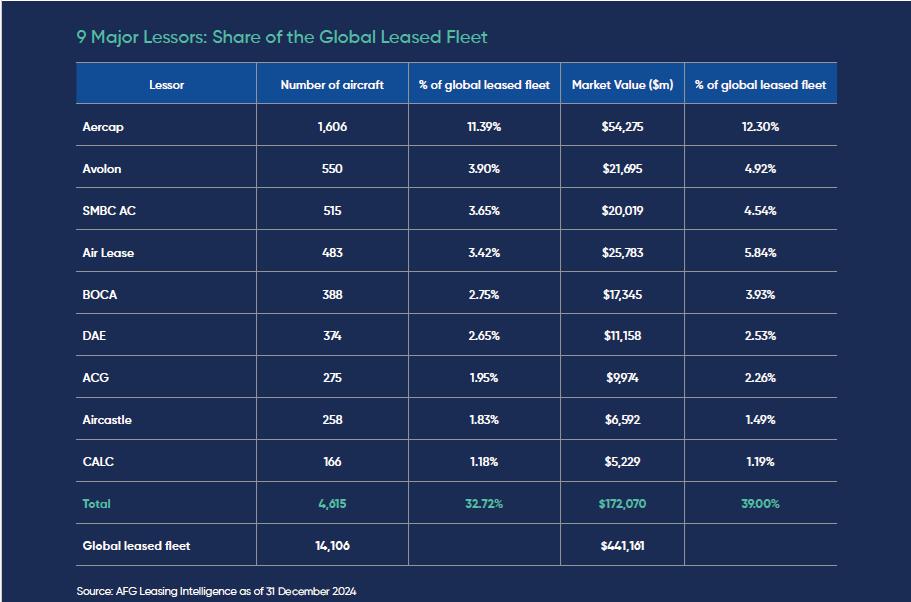
Source: Airfinance Global 2025 Annual Lessor Report.
Open Forum, Week of March 16
 LNA’s Comments Open Forum allows Readers opportunities to comment about any post (note, we said “Post”, not any “Topic”). All comments will be held for review and Moderation per our new policy. The Open Forum enables Readers to Comment on paywall articles (to the extent the paywall preview is open to all readers).
Maintain civility and follow Reader Comment rules.
A new Open Forum will be posted weekly.
Bjorn’s Corner: The Blended Wing Body, BWB, Airliner. Part 1.

By Bjorn Fehrm
March 13, 2026, ©. Leeham News: The flying wing has been researched for almost 100 years. During the Second World War, the Horten Brothers developed as flying wing military aircraft in Germany with mixed success. The Northrop company then flew several flying wing prototypes after the war, finding these to have severe stability issues at higher angles of attack.
With the advent of Fly-By-Wire, this could be mastered, and the flying wing’s inherent low radar cross-section is used in the B-2 and B-21 US Air Force bombers.
A flying wing is not suitable for use as an air transport passenger aircraft, as passengers would feel as if they were being transported in a coffin within the wing. An evolution of the flying wing is the Blended Wing Body (BWB, Figure 1), which moves the center section forward to form a blended fuselage that houses the payload.

Figure 1. The JetZero Z4 BWB in United’s colors. Source: JetZero.
As the search for lower fuel consumption and emissions intensified, the search for a more efficient way to transport passengers has led to increased interest in the BWB concept since the early 1990s, primarily from NASA and the US aircraft industry.
The proliferation of composite primary structures since 2000 has helped address the structural problems of a BWB. This has created a renewed interest in BWBs, both for military and commercial applications.
The state of alternative propulsion aircraft? Part 7.
Subscription required
By Bjorn Fehrm
March 12, 2026, © Leeham News: In our series on the state of alternative propulsion projects, we are analysing where the electric hybrid projects are and how parallel hybrids work and perform.
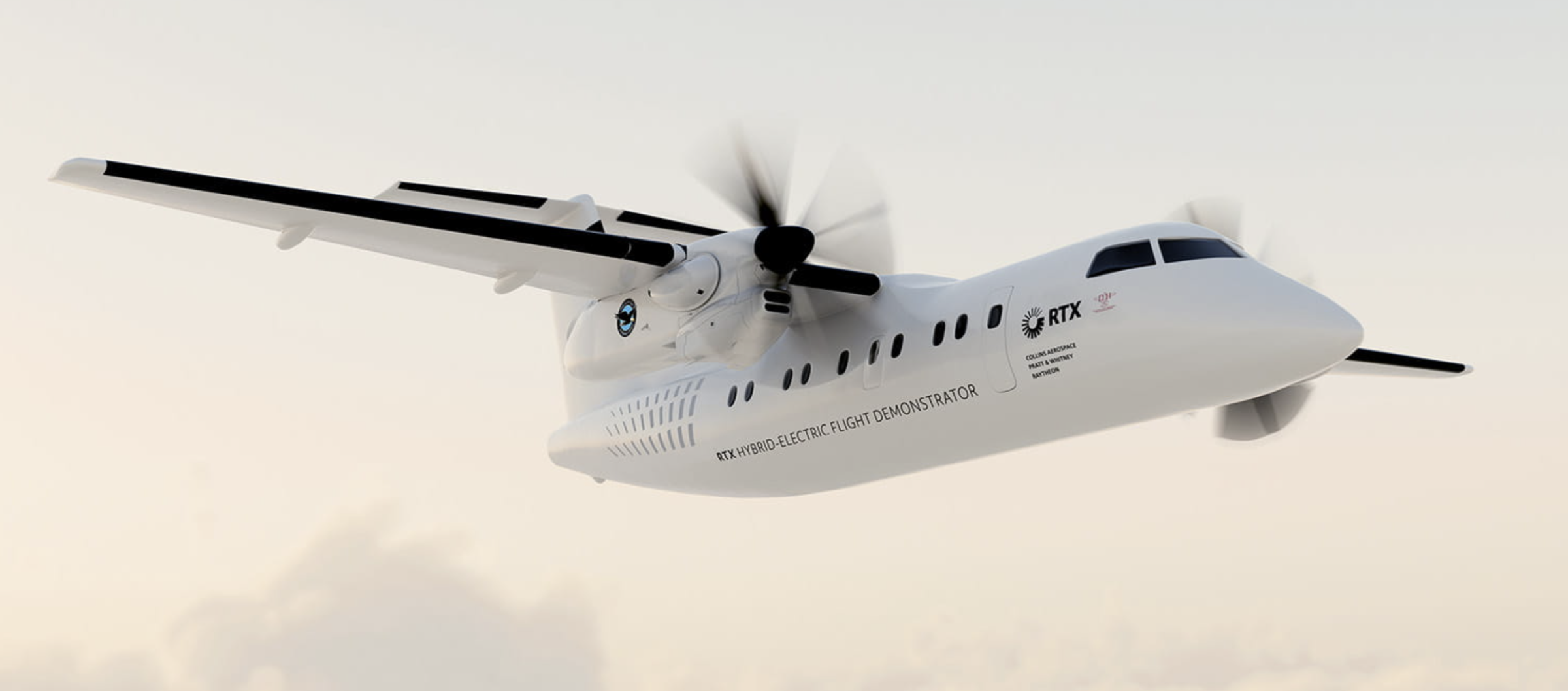
Figure 1. The Pratt & Whitney Parallel Hybrid DH8-100 test aircraft, presently under preparation. Source: Pratt & Whitney
We summarized the status last week and compared it to the serial hybrids that we analyzed before Christmas. Serial hybrids are motivated in special cases, but in general, they make an aircraft more expensive to produce and operate.
For those who react, “But hybrid work very well for cars”?, let’s summarize: The car thermal engines are energy hogs, and you brake away all the acceleration energy at the next stoplight. Hybrids reduce this waste by recovering energy during braking. Aircraft and aircraft engines are wonders of efficiency by comparison, and there are no energy-recovery phases in an airliner mission.
We now use our Aircraft Performance and Cost Model (APCM) to go deeper into the parallel hybrid. Can it avoid the negative verdict of the serial hybrid?
Middle East conflict impact on Airbus, Boeing
By Scott Hamilton
March 10, 2026, © Leeham News: The end of the war in the Middle East appears to be on a path of continued uncertainty and confusion, with no end in sight.
Middle Eastern airlines and lessors have 1,710 airplanes on order. The Mideast represents 9% of Airbus’ backlog. It represents 14% of Boeing’s backlog. Airbus has a 43% share of the Mideast backlog, while Boeing has a 57% share. Embraer is a fractional player.
Although President Donald Trump has already said the war has been “won” and could be over soon, he’s also provided mixed messages. Trump says that a cessation will be done with the concurrence of Israeli Prime Minister Benjamin Netanyahu, a notoriously anti-Iranian leader who urged Trump to engage in the first place, according to multiple media reports.
Trump also said that bombing may continue despite hinting that the war’s end is near.
For the airlines, the continued conflict means vastly reduced service. More of the current fleets are grounded than in service. For lessors, many have airplanes with Middle Eastern carriers, and a few whose home is in the region, some have outstanding orders with Airbus and Boeing. Lenders may face requests to restructure debt payments the longer the conflict continues.
Here’s a snapshot of the backlog exposure Airbus and Boeing have with the Middle East.

Figure 1. The Airbus-Boeing firm order backlog market share in the Middle East. Sources: Airbus, Boeing.
Supply chain is improving, but the light at the end of the tunnel could be a train
Subscription Required
By Scott Hamilton

Kevin Michaels, AeroDynamic Advisory. Credit: PNAA.
March 9, 2026, © Leeham News: Every year since the end of the global COVID-19 pandemic, everyone associated in whatever capacity with aerospace has complained about the supply chain.
There is a workforce shortage.
Suppliers are unable to meet contractual deadlines.
Airbus and Boeing haven’t been able to deliver their airplanes on time. Sometimes the aircraft are months later.
Engine makers are to blame.
Interior suppliers are to blame.
The little supplier making the widget is to blame.
Delays still plague the industry, but at long, long last, there seems to be a light at the end of the tunnel.
“I don’t want to focus just on the negatives. The bottom line is that the supply chain is improving. You talk to most executives at OEMs, they’ll tell you that supply chain is in better shape today than it was a year ago or two years ago,” said Kevin Michaels, managing director of the supply-chain consulting firm Aerodynamic Advisory.
Nevertheless, there’s a very real possibility that the light is from another set of oncoming trains.
“We’ve had some very interesting dynamics this year,” Michaels said during an appearance last month at the annual Pacific Northwest Aerospace Alliance (PNAA) conference.
What’s on those trains?
Regulatory bottlenecks and rare earth production concentration and shortages are just two of the overarching areas continuing to face the aerospace industry. Engines and interiors remain challenging.
Open Forum, Week of March 9
LNA’s Comments Open Forum allows Readers opportunities to comment about any post (note, we said “Post”, not any “Topic”). All comments will be held for review and Moderation per our new policy. The Open Forum enables Readers to Comment on paywall articles (to the extent the paywall preview is open to all readers).
Maintain civility and follow Reader Comment rules.
A new Open Forum will be posted weekly.
Embraer forecasts delivery growth as backlog jumps 20%
By Thomas Blackwood
Mar 6, 2026, © Leeham News: Embraer expects to increase deliveries from both its commercial and executive aviation units this year after posting record revenue in the full fiscal year 2025 as the backlog grew by a fifth.
 In its results published on Friday, the Brazilian plane-maker recorded revenues of $7.58 billion in 2025, the highest annual level ever, an 18% year over year increase and above the high end of Embraer’s guidance.
The Defense & Security and Executive Aviation divisions performed particularly well, with revenues up 36% and 25% yoy respectively – although the results were weaker for the company’s Commercial Aviation unit, despite a strong showing for its E2.
Embraer’s adjusted EBIT stood at $656.8 million for 2025, including a $54 million hit from U.S. import tariffs. That compared with $708.2 million adjusted EBIT in Embraer’s 2024 results, or $558.2 million excluding the payout from the Boeing arbitration.
“This performance was achieved despite the impact of U.S. import tariffs, and reflects our discipline in our ongoing cost reduction initiatives and efficiency gains,” Chief Financial Officer Antonio Carlos Garcia said in a call with analysts on Friday morning.
Guidance for 2026 shows a target for Commercial Aviation deliveries of between 80 and 85 aircraft and Executive Aviation deliveries between 160 and 170 aircraft. The upper end of the guidance, 255 deliveries, would result in a 4.5% increase in deliveries yoy.